

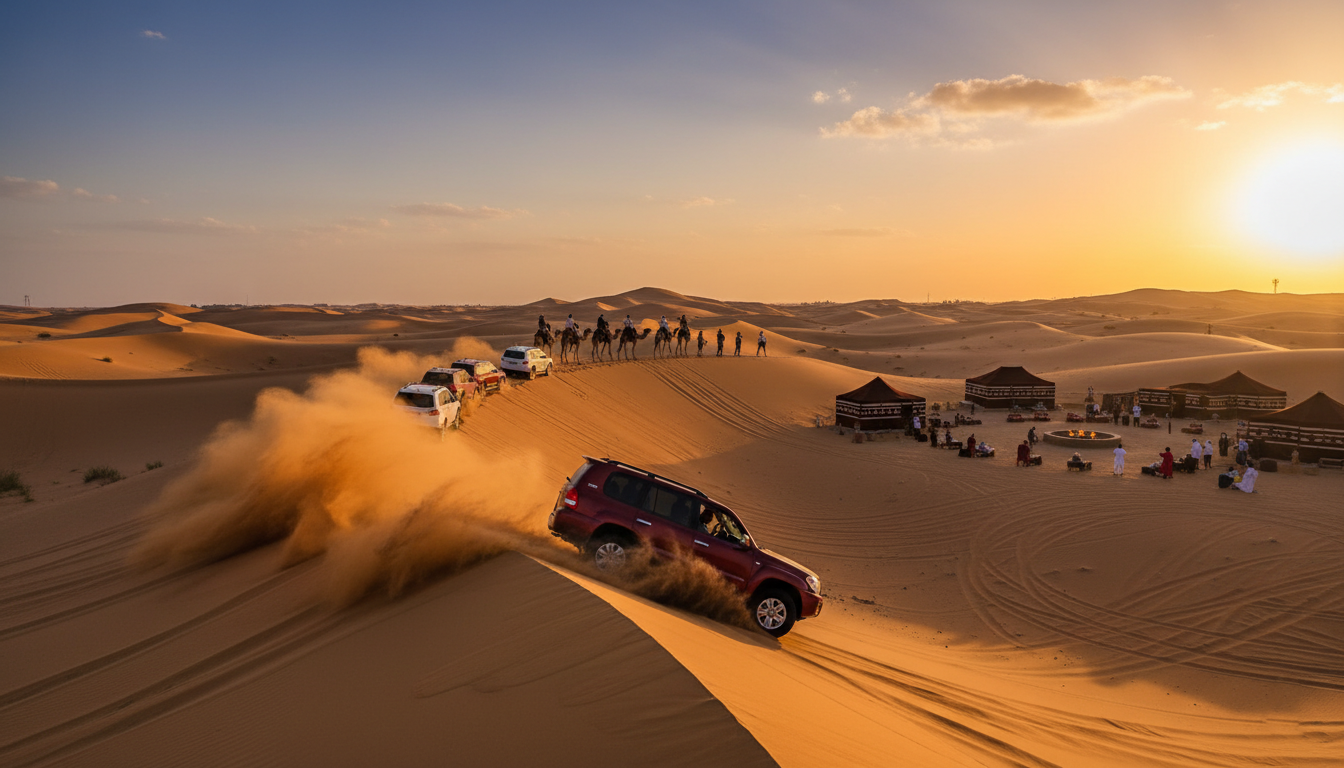
Certaines villes vous invitent à ralentir. Dubaï vous demande de suivre le rythme. Le rythme ici est vraiment unique aux EAU : de nouvelles ouvertures, des événements saisonniers et des expériences réparties dans 35 quartiers distincts signifient qu'il se passe toujours quelque chose. Le défi n'est pas de trouver des choses à faire. C'est de décider quelle version de la ville vous voulez découvrir en premier.
Dubaï Tourisme a confirmé que la ville a dépassé les 17 millions de visiteurs internationaux en 2024, ce qui en fait l'une des destinations les plus visitées au monde. Ce chiffre continue d'augmenter en 2025 – et cela se reflète dans la qualité et la variété de ce qui est proposé à tous les niveaux de prix.
Que vous disposiez de 24 heures ou d'une semaine complète, la structure de votre temps compte bien plus que sa durée.
Le meilleur point de départ dépend de qui vous accompagne
L'une des erreurs les plus courantes commises par les visiteurs est de suivre un itinéraire générique qui n'a pas été conçu pour leur style de voyage. Dubaï fonctionne très différemment pour une famille avec de jeunes enfants que pour un voyageur seul arrivant un dimanche soir ou un couple célébrant un anniversaire. Trouver la bonne correspondance change toute l'expérience.
Familles et voyageurs avec enfants
Pour les familles, la question de savoir que faire à Dubaï avec des enfants a une réponse claire et satisfaisante : le corridor des parcs à thème dans le complexe Dubai Parks and Resorts. Que faire à Legoland Dubaï convient particulièrement bien aux enfants de 3 à 12 ans – les attractions sont bien conçues, les files d'attente sont gérables en dehors des vacances scolaires, et la disposition générale est vraiment adaptée aux enfants. Que faire à Motiongate Dubaï fonctionne mieux pour les enfants plus âgés et les adolescents, avec un facteur de sensations fortes plus élevé et des divertissements plus variés.
Atlantis Dubaï est le troisième pilier de tout voyage en famille. Ce que l'on peut faire gratuitement à Atlantis Dubaï est limité – le parc aquatique et la plupart des attractions nécessitent des billets – mais la plage publique et les zones d'observation d'Atlantis Aquaventure ne coûtent rien. Pour ce que l'on peut faire plus largement à The Palm Dubaï, le trajet en monorail et la promenade le long du croissant de la Palm offrent aux familles un excellent aperçu sans dépenses excessives.
Le musée de Dubaï à Al Fahidi est sous-estimé pour les familles. Il est peu coûteux, climatisé et retient bien l'attention des enfants – en particulier les dioramas grandeur nature de la vie émiratie traditionnelle.
Voyageurs solitaires et couples
Que faire à Dubaï seul est une question qui mérite une meilleure réponse que la plupart des guides. La ville est extrêmement conviviale pour les voyageurs solitaires : le métro est sûr, les restaurants accueillent les personnes seules sans gêne, et les quartiers sont suffisamment compacts pour être explorés indépendamment. Les choses à faire à Dubaï en tant que voyageur solitaire fonctionnent généralement mieux lorsqu'elles sont centrées sur un ou deux quartiers par jour plutôt que d'essayer de tout couvrir en une seule fois.
Pour les couples, le Dubai Design District (d3) est l'une des zones les moins visitées de la ville. Ses galeries, ses restaurants indépendants et ses installations en plein air en font un après-midi véritablement adulte. Que faire à City Walk Dubaï est une autre excellente option – un quartier commercial en plein air qui mêle shopping, restauration et art extérieur d'une manière qui semble plus à échelle humaine que les grands centres commerciaux.
Pour un anniversaire à Dubaï, les dîners sur les toits avec vue sur les fontaines ou un yacht privé autour de la Marina de Dubaï sont les deux expériences qui tiennent systématiquement leurs promesses. Que faire pour un anniversaire à Dubaï inclut également des expériences comme un dîner privé dans le désert ou un tour en hélicoptère – toutes deux réservables via la plupart des services de conciergerie.
Quartier par quartier – les quartiers qui valent votre temps
Dubaï ne fonctionne pas comme une seule ville. Elle opère plutôt comme une collection de zones urbaines distinctes, chacune avec son propre caractère. Comprendre quelles zones correspondent à quelles ambiances est la clé pour construire un itinéraire cohérent.
Voici une répartition pratique :
| Quartier Idéal pour Temps nécessaire | ||
| Vieux Dubaï / Deira | Histoire, souks, culture du bras de mer | Demi-journée |
| Bur Dubaï / Al Seef | Patrimoine, cuisine locale, promenades au bord de l'eau | 3–4 heures |
| Downtown Dubaï | Horizon emblématique, centre commercial, fontaine | Demi-journée à journée complète |
| Marina de Dubaï | Dîners au bord de l'eau, croisières en yacht, vie nocturne | Soirée à journée complète |
| Palm Jumeirah | Stations balnéaires, Atlantis, vues panoramiques | Demi-journée |
| Bluewaters Island | Ain Dubaï, restauration décontractée, vues sur le coucher de soleil | 2–3 heures |
| Hatta | Escapades en montagne, kayak, village du patrimoine | Excursion d'une journée complète |
| Dubai Design District | Art, galeries, restaurants indépendants | 2–3 heures |
Que faire dans le vieux Dubaï reste l'une des demi-journées les plus enrichissantes de la ville. Le souk de l'or, le souk aux épices et le marché textile de Bur Dubaï sont à 20 minutes à pied les uns des autres. Que faire à Deira Dubaï récompense particulièrement l'exploration lente – la zone autour du marché aux poissons et du souk aux parfums semble complètement éloignée des tours de verre situées à quelques kilomètres.
Que faire à Al Seef Dubaï est plus simple : se promener, manger et s'asseoir au bord de l'eau. Les entrepôts restaurés abritent désormais des cafés et de petites boutiques, et la vue sur le bras de mer depuis les terrasses extérieures est l'une des plus agréables de la ville, surtout au crépuscule.
Pour Dubai Creek Harbour, l'attrait est plus récent. La promenade est plus calme que la Marina, les restaurants sont bons, et l'attraction à Dubaï qui ancre la zone – la Dubai Creek Tower, toujours en construction – domine déjà l'horizon d'une manière qui donne à la zone une impression de grandeur. Que faire à Dubai Creek pour une matinée est facile : se promener le long du port, prendre le petit-déjeuner dans l'un des restaurants au bord de l'eau et prendre le taxi aquatique pour traverser.
Que faire à Dubaï ce week-end, ce soir, ou tout de suite
Tout le monde n'arrive pas avec un plan. Parfois, vous atterrissez à Dubaï aujourd'hui avec un après-midi libre et avez besoin d'idées qui fonctionnent réellement sans réservation préalable.
Pour ce que l'on peut faire à Dubaï aujourd'hui sans préparation, trois options sont toujours efficaces : le spectacle des Fontaines de Dubaï (gratuit, commence à 18h), une promenade dans le souk de l'or de Deira (ouvert jusqu'à 22h la plupart des soirs), et un coucher de soleil depuis le niveau d'observation du Dubai Frame. Que faire à Dubaï ce soir à court terme est répondu par l'une de ces trois options – aucune ne nécessite de réservation, et toutes les trois valent vraiment votre temps.
Que faire à Dubaï ce week-end bénéficie d'une structure de vendredi. Le vendredi à Dubaï est le premier jour du week-end, et la ville y répond en conséquence – les brunchs ont lieu de midi à 16h dans des dizaines d'hôtels, les clubs de plage ouvrent tôt, et la promenade de la Marina de Dubaï est à son apogée en fin d'après-midi. Que faire à Dubaï le dimanche est plus calme : les musées sont moins bondés, la vieille ville est plus tranquille et les temps d'attente dans les restaurants sont plus courts.
Pour ce que l'on peut faire à Dubaï après minuit, les options se réduisent mais ne disparaissent pas. Plusieurs clubs de la Marina et du centre-ville fonctionnent jusqu'à 3h du matin, certains restaurants n'atteignent leur pic qu'à 23h, et la fontaine du Dubai Mall continue de fonctionner jusqu'à minuit. Les activités à Dubaï qui s'étendent jusqu'aux premières heures comprennent les salons de shisha à Bur Dubaï, les restaurants ouverts 24h/24 à Deira, et plusieurs bars d'hôtel avec des licences tardives.
Pour ce que l'on peut faire à Dubaï le matin spécifiquement, les premières heures conviennent le mieux à la vieille ville. Avant 9h, les souks sont calmes, le bras de mer est tranquille et la lumière est extraordinaire. Que faire à Dubaï pendant la journée s'oriente vers des expériences intérieures à mesure que les températures augmentent – particulièrement au printemps et en été.
Escales à l'aéroport, règles et choses à ne pas faire
Que faire à l'aéroport de Dubaï varie considérablement en fonction de votre terminal et de votre temps. Que faire à l'aéroport de Dubaï, terminal 3 – le principal hub d'Emirates – comprend un hôtel de transit (le Marhaba Sleep 'n Fly), une piscine, plusieurs restaurants et des boutiques hors taxes sur deux étages. Pour ce que l'on peut faire à l'aéroport de Dubaï pendant 3 heures, rester dans le terminal est le plus logique.
Pour les escales plus longues, la ville devient accessible. Que faire à l'aéroport de Dubaï pendant 5 heures avec une sortie en ville : passer l'immigration, prendre le métro (20 minutes jusqu'aux stations centrales), passer une heure dans le Vieux Dubaï ou à la Marina, et revenir avec du temps tampon. Que faire à l'aéroport de Dubaï pendant 8 heures s'étend confortablement à un itinéraire d'une demi-journée. Que faire lors d'une escale à Dubaï de 6 heures se situe entre ces deux options – possible mais serré, et seulement confortable si vous savez exactement où vous allez.
Quant à ce qu'il ne faut pas faire à Dubaï en tant que touriste, la liste est pratique plutôt que punitive :
- Ne pas manger, boire ou fumer dans les espaces publics pendant les heures de jeûne du Ramadan
- Ne pas photographier les gens sans leur demander la permission, surtout dans les marchés et près des mosquées
- Ne pas s'habiller de manière révélatrice en dehors des zones de plage et de piscine
- Ne pas transporter de médicaments non autorisés – même certains médicaments courants en vente libre sont restreints aux EAU
- Ne pas présumer d'une résolution informelle si vous rencontrez un problème juridique – que faire si vous avez une affaire de police à Dubaï exige immédiatement un avocat enregistré aux EAU
La question de savoir ce qu'il n'est pas permis de faire à Dubaï mérite d'être consultée sur le site officiel du tourisme du gouvernement des EAU avant le départ. Les règles sont claires, constamment appliquées et faciles à respecter une fois que vous les connaissez.
Planification saisonnière et occasions spéciales
Été, Ramadan et Aïd
Que faire à Dubaï en été est une question qui prend de nombreux visiteurs au dépourvu. De juin à septembre, les températures dépassent les 40°C, mais la ville continue de fonctionner à plein régime. Que faire à Dubaï pendant l'été se concentre sur les expériences intérieures : Ski Dubaï au Mall of the Emirates, le vaste aquarium du Dubai Mall, les parcs de réalité virtuelle et le Musée du Futur. Que faire à Dubaï en août spécifiquement s'accompagne d'un bonus : les tarifs des hôtels baissent considérablement, et les principaux lieux intérieurs sont les moins fréquentés.
Que faire à Dubaï pendant le Ramadan est une expérience vraiment spéciale si vous l'abordez avec ouverture. La journée est calme et contemplative ; les soirées après l'iftar s'animent avec des dîners communautaires, des marchés en plein air, et une chaleur dans les rues difficile à décrire sans l'avoir vécue. Que faire à Dubaï pendant l'Aïd étend cette énergie – concerts publics, feux d'artifice au-dessus de Dubai Creek Harbour et horaires prolongés dans la plupart des parcs et attractions.
Que faire pendant l'Aïd à Dubaï pour une journée complète : commencez par la zone de prière de l'Aïd pour l'atmosphère, passez à l'une des zones de festival en plein air l'après-midi, et terminez par le spectacle de feux d'artifice. Que faire pendant l'Aïd à Dubaï est devenu de mieux en mieux organisé, la ville le traitant désormais comme un événement majeur du calendrier international.
Réveillon du Nouvel An et anniversaires
Que faire à Dubaï pour le réveillon du Nouvel An est l'une des questions les plus recherchées sur la ville, et pour cause – la célébration y est extraordinaire. Le Burj Khalifa accueille l'un des plus grands feux d'artifice du monde, et la zone environnante se remplit des heures à l'avance. Pour ce que l'on peut faire à Dubaï pour le réveillon du Nouvel An avec plus de confort, plusieurs hôtels proposent des forfaits dîner sur les toits avec des vues réservées sur les fontaines qui valent chaque dirham.
Que faire pour votre anniversaire à Dubaï vous offre de véritables options pour tous les budgets. Un safari dans le désert à Dubaï avec un dîner privé sous les étoiles, un tour en hélicoptère au coucher du soleil, une location de yacht autour de Palm Jumeirah, ou simplement une réservation dans l'un des restaurants sur les toits de la ville – tout cela est simple à organiser. L'anniversaire à Dubaï est devenu une niche en soi, avec plusieurs opérateurs spécialisés exclusivement dans les expériences de célébration.