

Al Seef
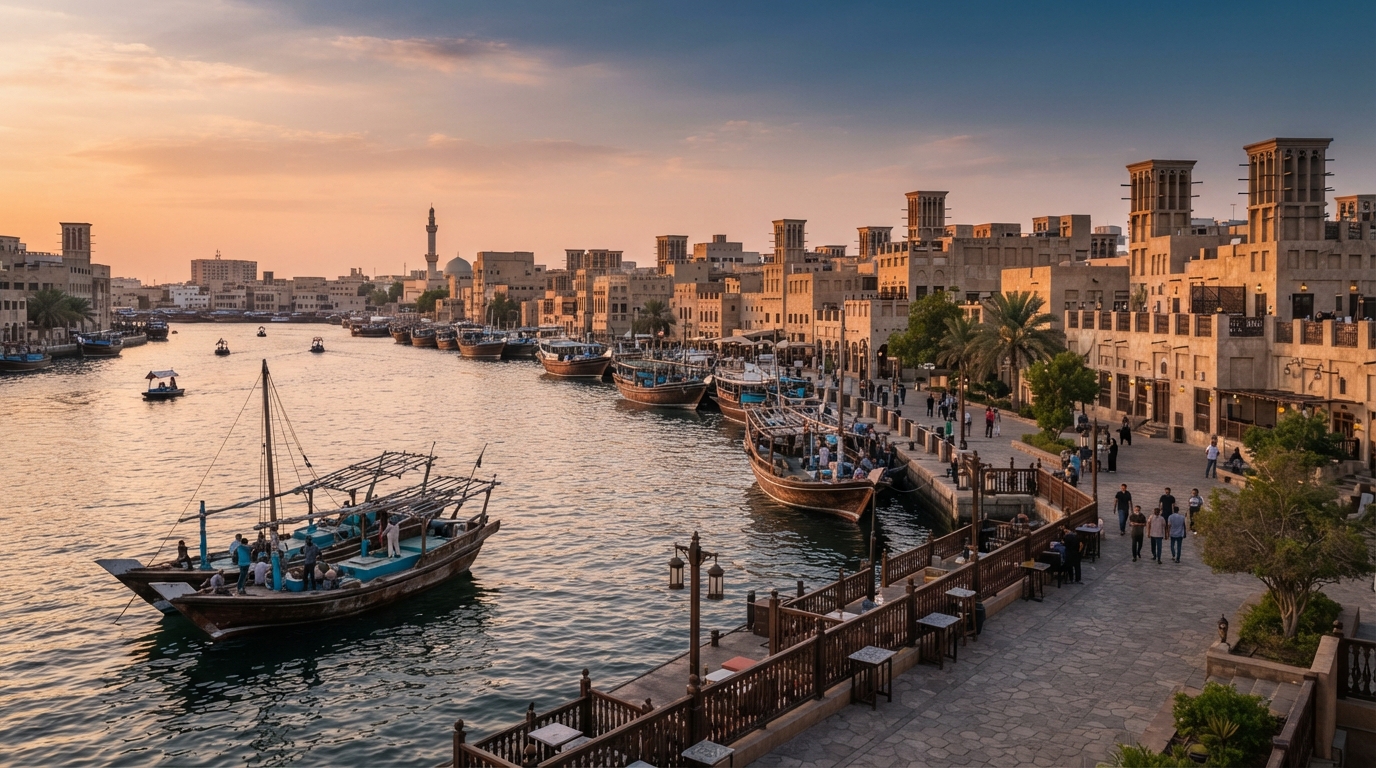
Few corners of Dubai manage to hold both centuries of trading history and a modern skyline in the same frame, and that's exactly what makes a walk along the creek here so rewarding. Old wind-tower houses sit a few steps from glass-fronted cafes, wooden abras still cross the water the way they have for generations, and the whole stretch turns golden once the sun drops behind the towers. This guide breaks down what to see, where to eat, where to stay and how to plan a visit without wasting a single hour.
Al Seef Dubai: where the city's old and new waterfront meet
Al Seef sits along Dubai Creek in Bur Dubai, close to the emirate's original trading heart. The area is split into two distinct sections, and understanding the difference helps set expectations before arriving.
The heritage side and its old-town charm
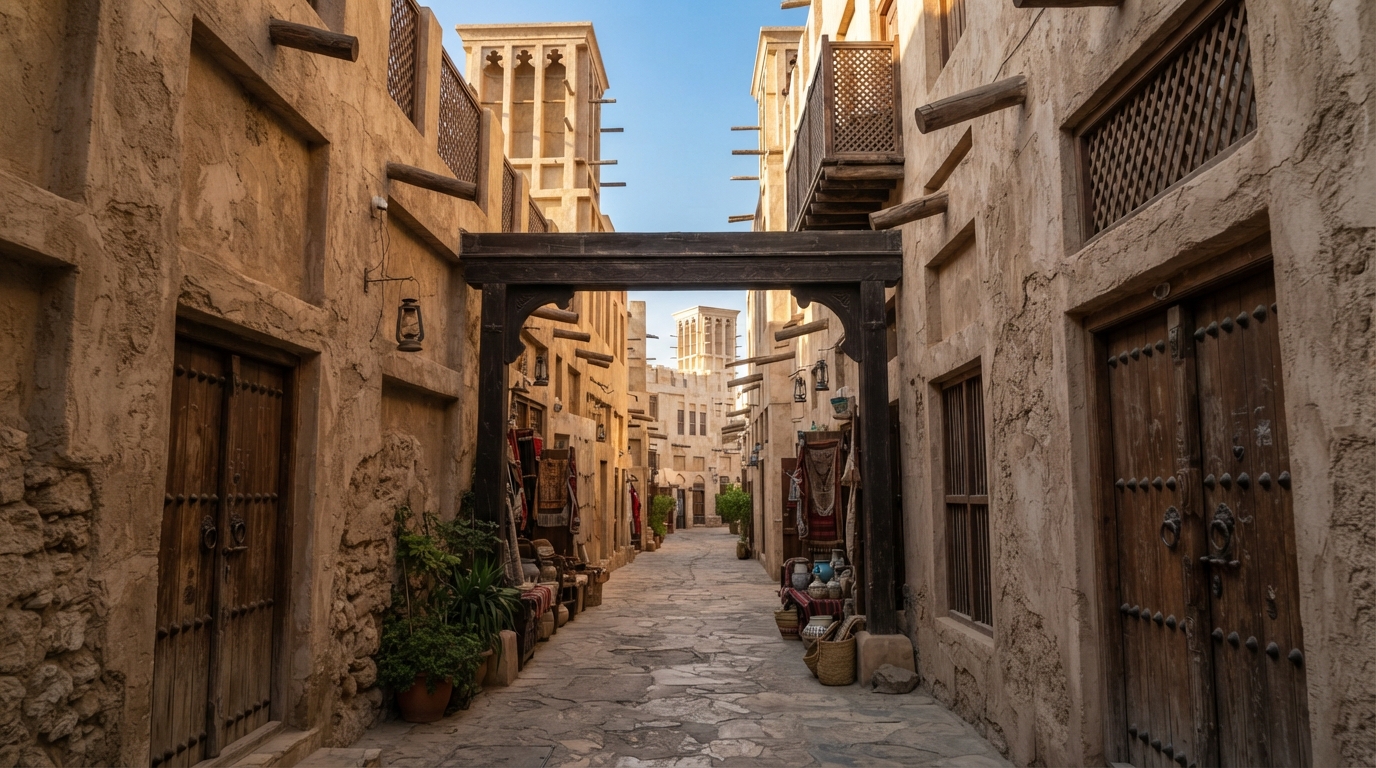
The Al Seef Heritage Area recreates the look of old Dubai, with coral-stone buildings, narrow alleys and courtyards inspired by the 1950s. This corner feels closer to a living museum than a shopping strip, and it gives a fair sense of what the city looked like before the skyscrapers arrived. Traditional coffee houses, art galleries and small workshops line the lanes, and the pace here stays slow even during busy weekends.
Al Seef 2 and the modern extension
Al Seef 2 takes the same waterfront and adds a contemporary layer, with wider promenades, international restaurants and a row of retail units built for evening strolls rather than daytime errands. The contrast between both halves is part of the appeal: visitors can cross from a 70-year-old alley into a glass-and-steel terrace within five minutes, all along the same creek frontage.
Shopping, cafes and things to do along the water
Al Seef Street runs the length of the district and connects most of what matters to a first-time visitor. Retail here ranges from small heritage stalls to fuller-sized centres, and the choice usually depends on how much time is available.
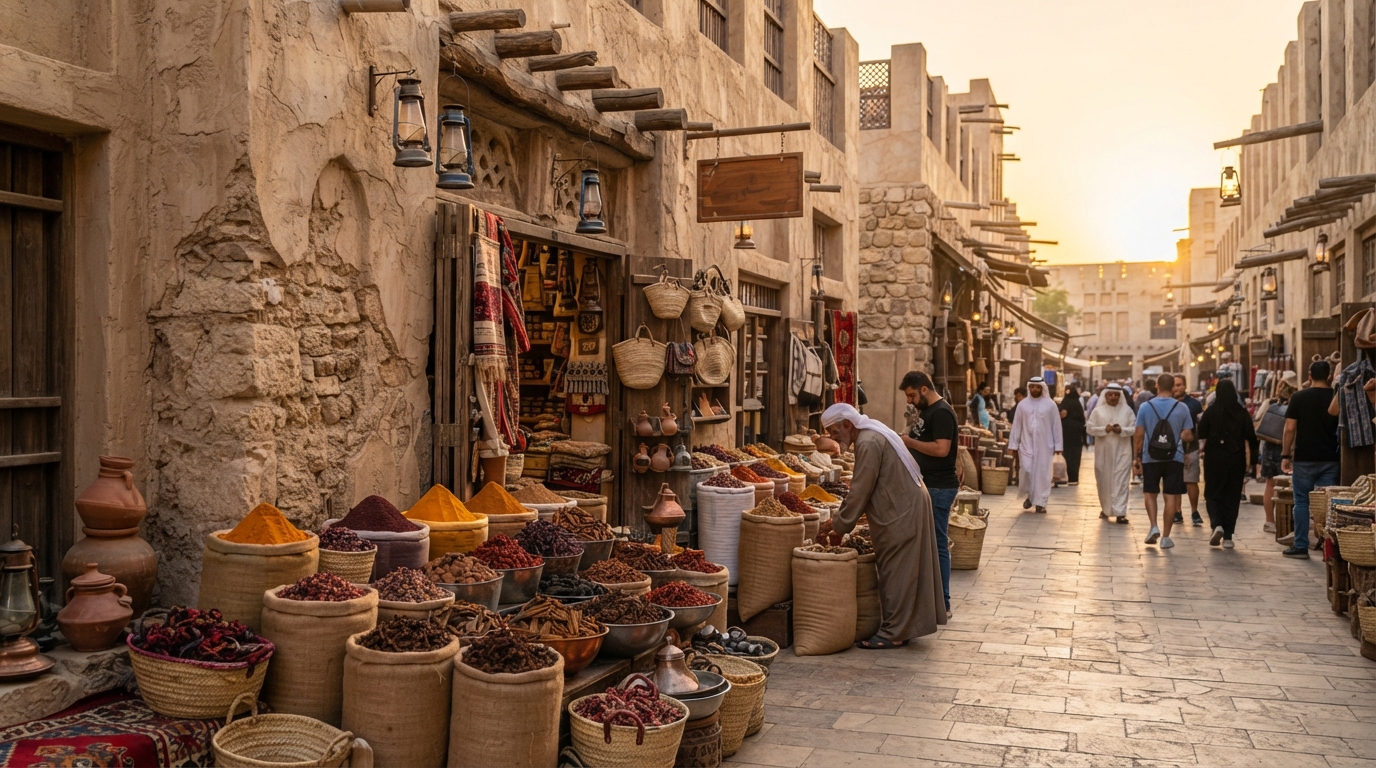
The Al Seef Village Mall covers most of the everyday fashion and lifestyle stores, while a walk through Souk Al Seef keeps the market atmosphere going with spice, textile and perfume stalls. Marsa Al Seef sits closer to the marina, where boats dock right next to the restaurant terraces, and a smaller cluster of stalls around the Al Seef Market area suits anyone hunting for handmade crafts rather than mainstream brands.
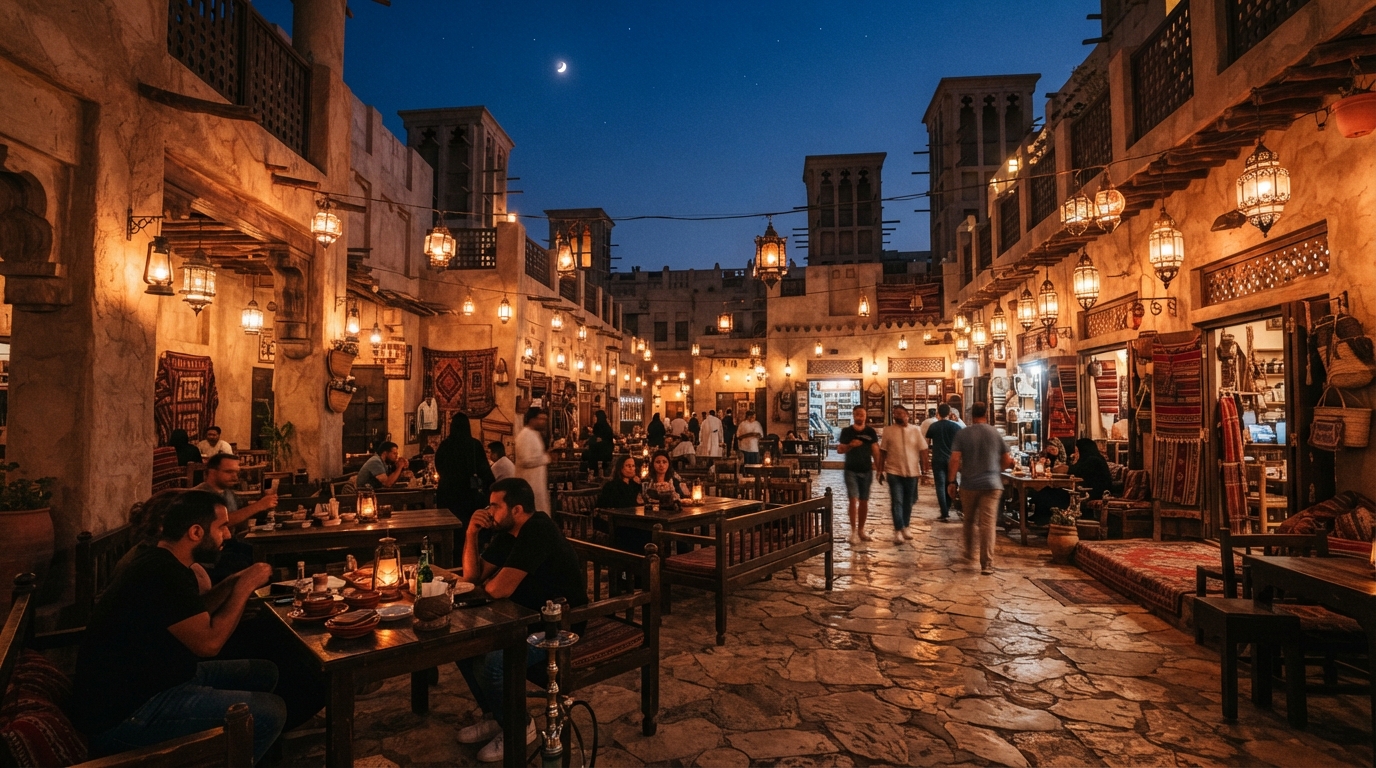
Food options multiply once the sun starts to set. A Starbucks branch and a Kailash Parbat outlet remain two of the most searched names on the strip, the latter known for a menu large enough that regulars often check it before deciding where to sit. Arabian Tea House and Al Fanar cover Emirati cuisine a few steps apart, while a Chipotle and a Piadera handle the more casual end of the crowd. Most of these restaurants sit within a ten-minute walk of each other, which makes comparing menus on the spot fairly painless. Shoppers sometimes confuse this stretch with Madinat Jumeirah, another waterside souk on the opposite side of the city, though the atmosphere and layout differ quite a bit between the two.
Where to stay near the creek
Accommodation around Al Seef ranges from budget rooms to heritage-style boutique hotels, and the choice usually comes down to how much creek-front access matters.
Budget-friendly and mid-range stays
A Hampton by Hilton property keeps rates reasonable while staying inside walking distance of the souk, a common pick for anyone prioritising location over extras. A handful of serviced apartments in the area, some listed closer to Rigga, suit longer stays or families needing a kitchenette rather than a standard hotel room.
Boutique and heritage-style hotels
A Canopy by Hilton hotel sits directly on the water and blends contemporary rooms with traditional detailing, a popular middle ground between budget and luxury. The Al Seef Heritage Hotel leans further into the old-town aesthetic with courtyards and low-rise architecture, closer in spirit to the heritage area than to a standard chain property. Travellers comparing residential towers rather than hotel rooms sometimes come across listings for Al Seef Tower 2 or Al Seef Tower 3, worth noting as separate from a similarly named building near Dubai Marina, which sits nowhere close to the creek despite the shared name. For a change of scenery altogether, Dubai Marina Walk offers a completely different waterfront setting with its own dining strip, worth comparing before booking a base for the week.
A quick look at activities and prices
Prices below are approximate and change with season and demand, so treat them as a planning reference rather than a fixed rate.
| ActivityTypical durationApproximate price (AED) | ||
| Abra crossing on the creek | 5–10 minutes | 1–2 |
| Traditional dhow cruise | 1–2 hours | 75–150 |
| Heritage walking area | Self-paced | Free entry |
| Dinner at a mid-range restaurant | 1 hour | 80–200 per person |
A short boat ride across the creek and a longer dhow cruise remain the two most booked activities in the district, the second often paired with a dinner service depending on the operator. Families often add a stop at the small park nearby for open green space, and a Fitness First branch inside one of the malls covers anyone wanting a session between sightseeing blocks. Visitors splitting their trip between the creek and the coast often pair a morning here with an afternoon at Palm Jumeirah Dubai, since the two areas sit on opposite ends of the visitor experience but work well back to back.
Same name, different emirates: Abu Dhabi and Sharjah
The name causes some confusion online because it applies to more than one project across the UAE. A residential and retail community in the capital, known there as Al Seef Village, is a separate development with its own shops and restaurants, unrelated to the district in Bur Dubai. A resort along the Abu Dhabi coastline, run under the Andalus brand, adds another layer to the mix and gets booked by travellers who assumed they were looking at the Dubai waterfront. A smaller hotel carrying the same name also exists in Sharjah. Anyone booking through a map app should double-check the pin before confirming a reservation, since listings from all three emirates tend to show up under near-identical names.
Planning your trip to Al Seef: parking, timing and getting there
A little preparation saves time once you're on-site, particularly during weekends and public holidays.
Getting there by metro and car
The nearest metro station connects through the Green Line, with a short walk or a taxi ride needed to reach the creek itself. For those driving, a main road runs alongside the district, and the general location sits close enough to Burjuman that both areas are often visited on the same afternoon. Directions pulled from most map apps generally point to the same drop-off point near the heritage gate, which keeps navigation fairly simple compared with some of Dubai's larger districts.
Parking, timing and seasonal events
On-site parking is available, with some free spaces near the heritage side during off-peak hours, though spots fill quickly on weekend evenings. Most shops and restaurants operate from late morning until midnight, and the evening hours are widely considered the best time to visit thanks to the lit walkways along the water. During the holiday season, a Christmas tree and a small seasonal market draw an evening crowd, and questions about fireworks timing or the exact viewing spot tend to spike whenever a public celebration is scheduled. Before setting off, it's worth checking things to do in Dubai this weekend in case a temporary event affects opening hours.
Dubai's tourism sector kept growing through 2025, with the emirate welcoming close to 19.6 million international overnight visitors, a 5 percent increase year on year and a third straight record-breaking year, while average hotel occupancy climbed above 80 percent according to figures from the Dubai Department of Economy and Tourism. Waterfront districts such as this one continue to carry a large share of that demand, particularly during the cooler months between November and March.
FAQ
Evenings work best, once temperatures drop and the waterfront lighting turns on, though early morning suits anyone wanting quiet photos of the heritage buildings.
Yes, on-site parking exists near both sections of the district, with free spaces sometimes available during quieter hours, though weekend evenings get busy fast.
The closest station links through the Green Line, followed by a short taxi ride or a ten-to-fifteen-minute walk depending on which entrance is used.
Walking through the heritage area and the promenade costs nothing. Paid activities such as a dhow cruise, boat ride or dining come with their own separate charges.
It's a waterfront district along Dubai Creek in Bur Dubai, split between a recreated heritage area with old-style architecture and a modern extension with restaurants, shops and a promenade.